4th Infantry Regiment
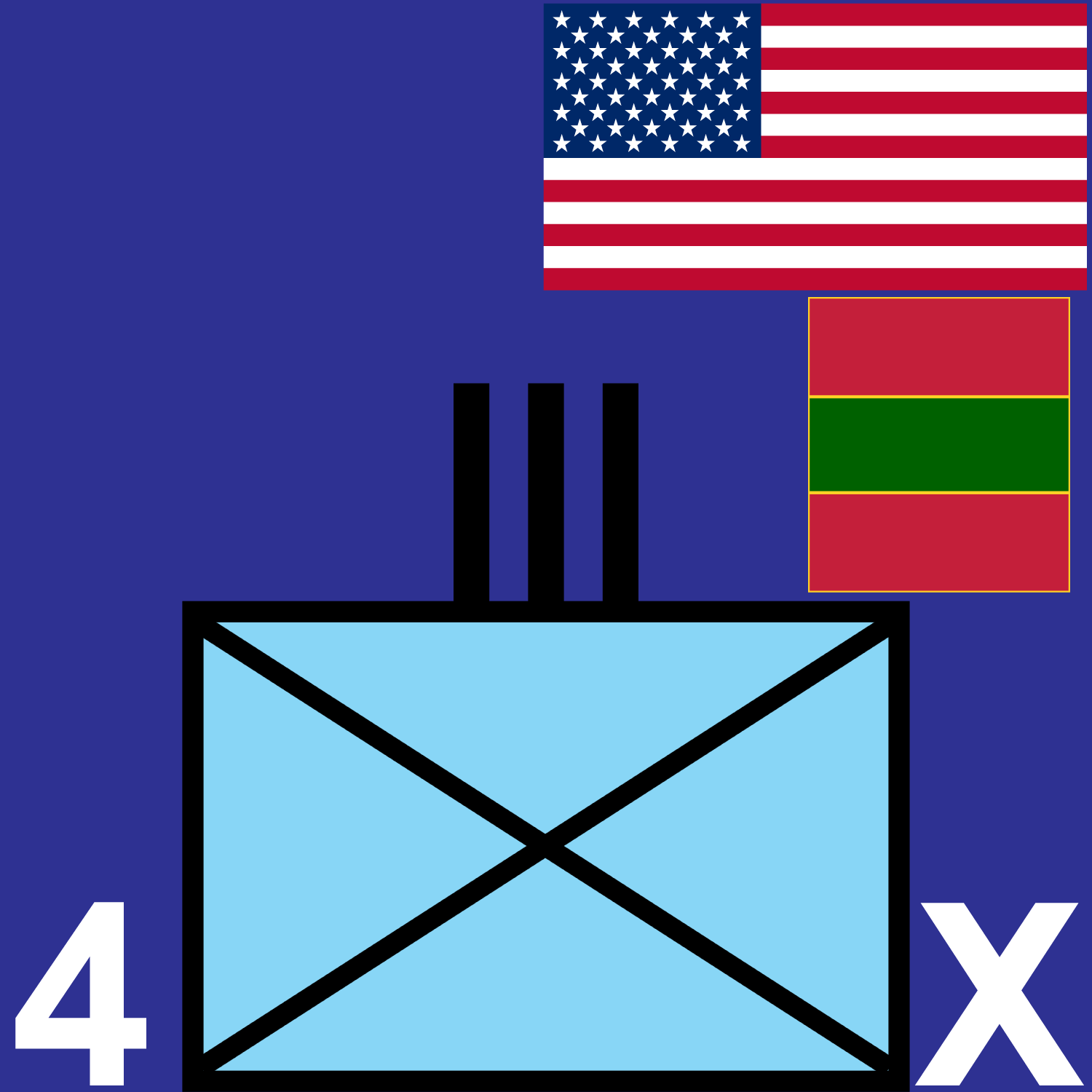
Modern Era, United States, Infantry
The modern 4th Infantry Regiment traces its permanent lineage to 12 April 1808, when the regiment was constituted in the Regular Army to meet the rising pressure of frontier conflict in the Old Northwest. It fought at Tippecanoe under William Henry Harrison and then in the War of 1812, where it endured the humiliation of Hull's surrender at Detroit before rebuilding and returning to combat. That early service established the regiment as one of the Army's older line infantry formations, even though an earlier temporary "4th Infantry" from the Legion era had no direct lineal connection to the current regiment.
During the nineteenth century the 4th served in a long sequence of frontier and expeditionary campaigns. It fought in the Creek and Seminole wars, in the Mexican War from Palo Alto through Chapultepec, and in the Civil War after moving from the Pacific coast to the eastern theater. After 1865 it returned west and continued campaigning in the plains and mountain west before adding service in Cuba during the War with Spain and in the Philippines during the Philippine-American War. By the turn of the twentieth century the regiment had accumulated a record that ranged from the old Northwest Territory to Luzon.
In the twentieth century the regiment entered the Army's divisional system through the 3rd Infantry Division. In World War I it was assigned to the 3rd Infantry Division on 1 October 1917, went to France in 1918, and fought in the Aisne, Champagne-Marne, Aisne-Marne, Saint-Mihiel, and Meuse-Argonne campaigns. Like other regiments of the 3rd Division, it took part in the hard fighting that made that division one of the better-known American formations on the Western Front.
The interwar years kept the regiment in the 3rd Division until 1940, but its World War II service followed a different path. Relieved from the 3rd Division in May 1940, the regiment was sent north and assigned to the Alaskan Defense Command. There it formed part of the nucleus of the Army's defense of Alaska and later fought at Attu in the Aleutian campaign. In other words, its principal World War II combat service was not under a numbered infantry division but under the separate Alaskan command created to counter the Japanese threat in the North Pacific.
After the war the regiment moved into the long Cold War cycle of occupation duty, NATO assignments, and later mechanized service in Europe. Its battalions served in Germany and, in later decades, in armored and mechanized formations that included the 3rd Infantry Division and eventually units of the 10th Mountain Division. The regiment's post-1945 identity was therefore less about one continuous regimental combat team than about battalions carrying the 4th Infantry lineage into different operational roles.
The 4th Infantry Regiment did not become a major regimental combat formation in Korea or Vietnam in the same way some older infantry regiments did, but its battalions remained active in the Cold War Army and later fought in the wars of the early twenty-first century. That long continuity reflects the regiment's character: a line infantry organization repeatedly reorganized to suit the Army's needs, but still carrying a lineage that runs from Tippecanoe and Mexico to Alaska, Germany, Iraq, and Afghanistan.
Battalion Page
A dedicated battalion subpage now collects the regiment's known battalion icons and short sketches for the 1st, 2d, and 3d Battalions. Open the 4th Infantry Regiment Battalions page.
Division timeline, 1916–2026 · assignments, patches and deployments →