68th Infantry Regiment
Not yet constituted / organized
This timeline begins in 1916. The cited organization had not yet been constituted or organized during this interval; its formation follows.
Infantry timelines · Infantry numbers 1–200
A century of division assignments
1916–2026 · Regimental service, battle groups, battalions and deployments.
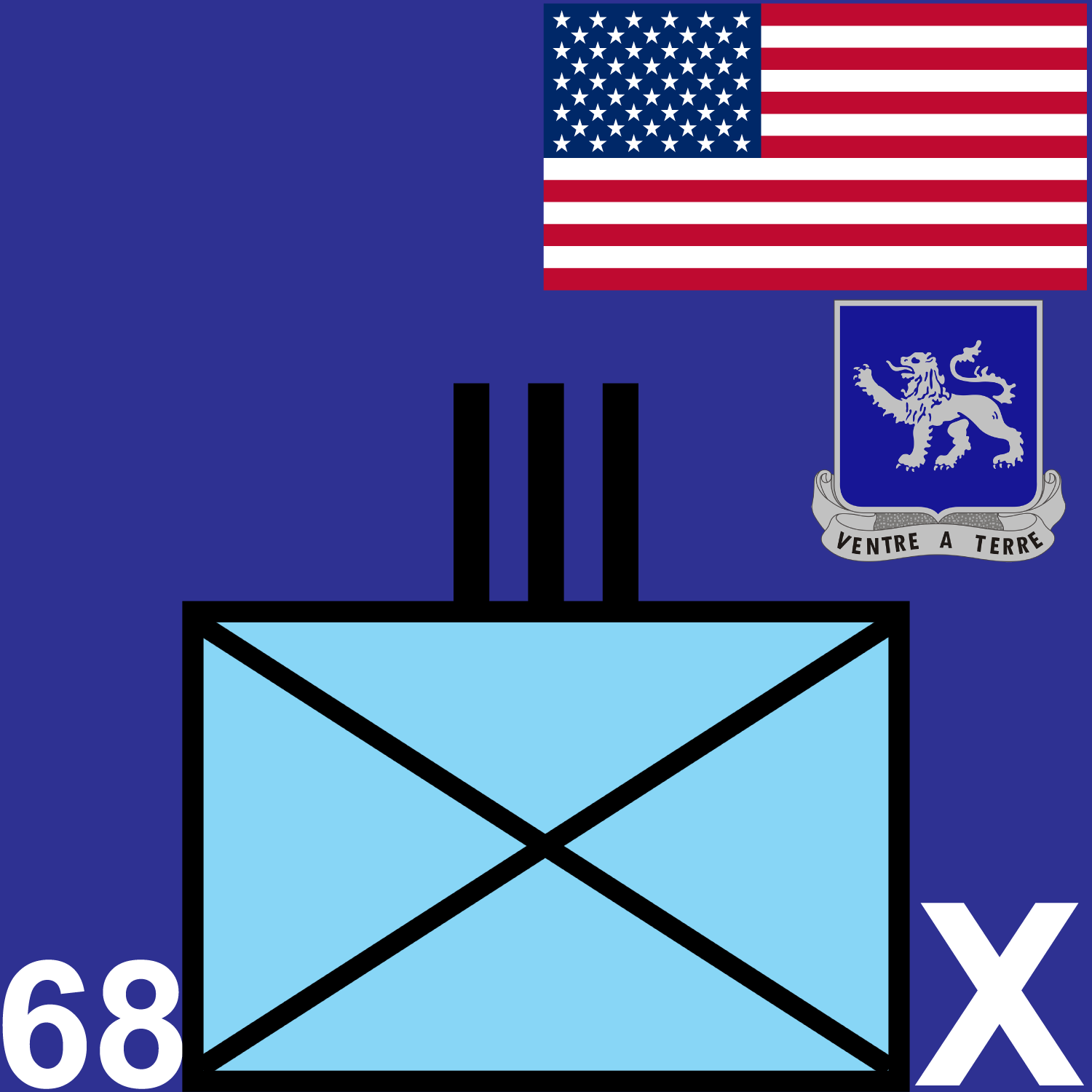
The common row follows the regiment. After its reorganization, battle groups and battalions could hold different assignments at the same time. A deployment or temporary attachment does not by itself change the assigned division. Battalion rows follow headquarters lineages, often descended from lettered companies, rather than assuming that the old regimental battalions continued unchanged.
The World War I regiment and the 1933 Light Tanks organization are distinct. The tank row closes at the July 1940 conversion to armor; later armor deployments are outside this infantry timeline.
Representative division patches. Patterns could change over time; an image does not imply that the exact version was worn throughout every period. Divisions without a verified asset remain identified by name.
At a glance
Bar widths follow elapsed time.
Scroll horizontally on a small screen. Select a segment to open its dated entry. Diamond markers open deployments; their positions indicate the labeled year, not an exact start date or duration. Short assignments are easier to inspect in the list below.
Explore a date
Look up the dated rows below. Service notes with incomplete dates are excluded; last-documented results do not certify a current assignment.
The dated record
No deployment with sufficiently established dates is plotted for this regiment. Read the assignment cards and service notes for its garrison, training and successor-unit history.
Assignment ends are exclusive: the next period starts on that date. *Striped final bars mean last documented, with later status unverified through the page cutoff. Unknown intervals are not treated as inactive.
68th Infantry Regiment
This timeline begins in 1916. The cited organization had not yet been constituted or organized during this interval; its formation follows.
68th Infantry Regiment
The available record does not establish a precise assignment throughout this interval. No division is inferred.
68th Infantry Regiment

Division names are normalized across historical redesignations. This entry follows the cited unit lineage.
68th Infantry Regiment
The organization was removed from the rolls. A later reconstitution, if documented, is shown separately. The source establishes this last recorded status, not uninterrupted service through 2026. The striped bar extends to the page cutoff to keep the later research gap visible.
68th Infantry (Light Tanks) · Separate organization
The unit or its headquarters lineage was inactive. This status does not imply that every inherited honor or divisional affiliation was erased.
68th Infantry (Light Tanks) · Separate organization
The cited record establishes service outside an assigned division. Higher headquarters and temporary operational attachments could still direct the unit.
Service note · dates incomplete
In the separately constituted tank regiment, 1st Battalion activated 1 January 1940 and inactivated 30 June 1940 before the conversion to armor.
Service note · dates incomplete
The separate tank regiment’s 2d Battalion activated 1 January 1940. This is not evidence of continuity from the 1918 regiment.
Army Center of Military History lineage certificates provide the dated backbone. Regimental associations and secondary histories supplement individual operations and battalions. Where the evidence stops, the page says so. A page cutoff is not a claim that every unit directory was current on that date.
Earlier battalions are covered by common regimental service; separately dated lineages and substantiated later battalions receive their own rows or notes. A unit graphic alone is not evidence of a battalion assignment. Reserve, training and inactive organizations are distinguished from active combat units.
Unmodified artwork from Wikimedia Commons; individual file pages identify the artist and license. Insignia represent the divisions, not regimental affiliation badges.
