2nd Infantry Regiment
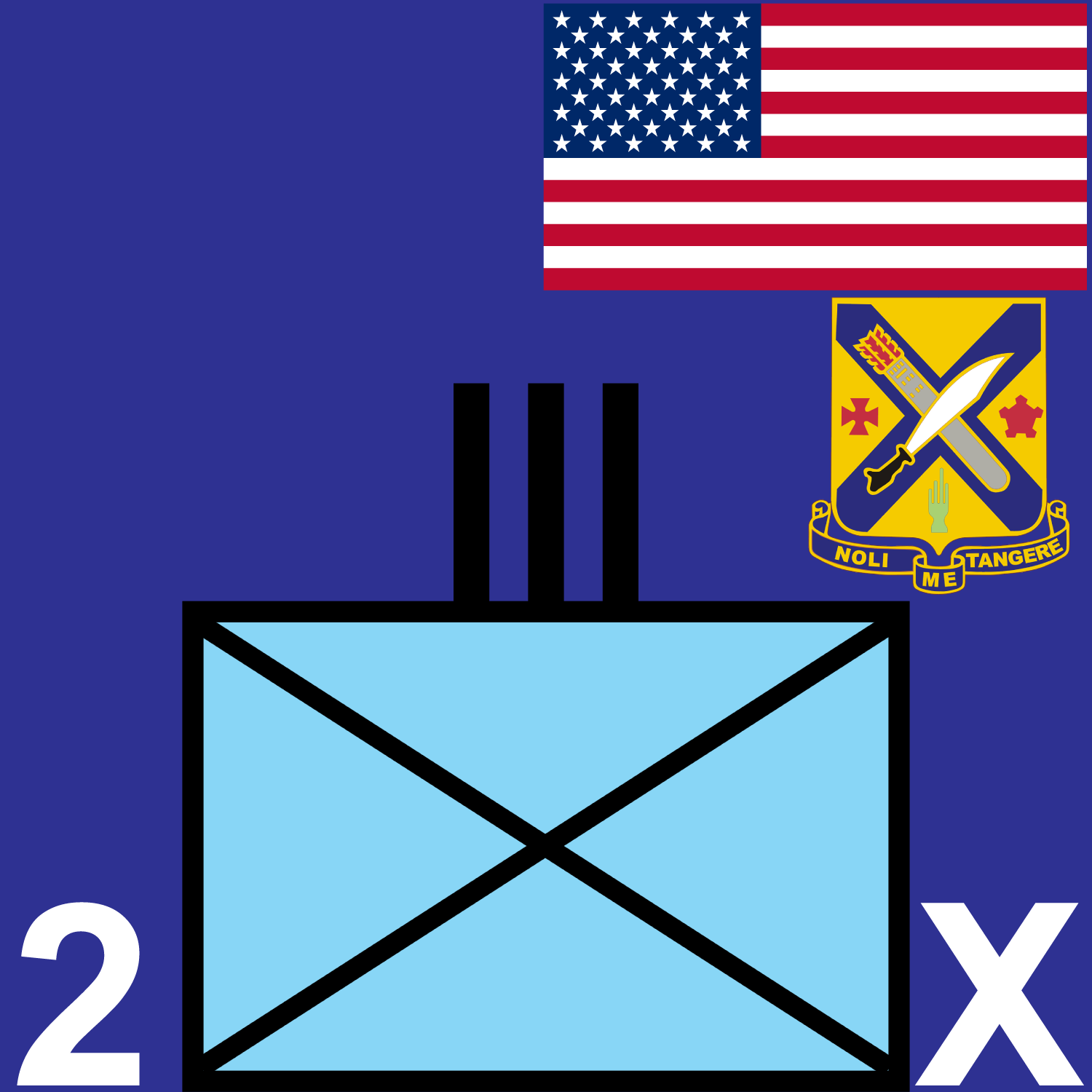
Modern Era, United States, Infantry
The present 2nd Infantry Regiment traces its lineage to 12 April 1808, when it was constituted in the Regular Army as the 6th Infantry. That point matters, because the earlier regiment once designated the 2d Infantry in 1791 does not belong to this lineage; that older unit's history passed into the 1st Infantry after the post-War of 1812 consolidations. The modern 2nd Infantry was created from the 6th Infantry and then consolidated in 1815 with elements of the 16th, 22d, 23d, and 32d Infantry to form the 2d Infantry Regiment. Its official campaign credit begins with the War of 1812, including Chippewa, Lundy's Lane, and Alabama 1814.
In the decades after 1815 the regiment spent much of its time on the northern frontier and around the Great Lakes, manning posts and supporting the Army's expanding network of forts. It served in the Seminole War in Florida and later fought in the Mexican War, where it joined the operations that carried General Winfield Scott's army from Vera Cruz inland through Cerro Gordo, Contreras, Churubusco, Molino del Rey, and Chapultepec. Like many Regular Army regiments, the 2nd alternated between expeditionary campaigning and long stretches of garrison duty on the frontier.
The regiment's Civil War service was unusually broad. It fought at Wilson's Creek and First Bull Run, then served with the Army of the Potomac in campaigns that included Antietam, Fredericksburg, Chancellorsville, and Gettysburg, while its official honors also reflect western-theater and southern campaign credits inherited through the later consolidation with the 16th Infantry. Attrition reduced the regiment to a tiny nucleus by 1864, but the line survived, and on 18 April 1869 the 2nd Infantry was consolidated with the 16th Infantry and continued under the 2d Infantry designation. In the postwar decades it resumed frontier service, earning additional Indian Wars credit against the Nez Perce, Bannocks, and at Pine Ridge.
At the end of the nineteenth century the regiment took part in the Santiago campaign of the War with Spain and then went on to hard service in the Philippine Insurrection. It fought in numerous engagements in the islands between 1900 and 1902 and returned again from 1906 to 1908, adding counterinsurgency and overseas occupation experience to a record that had previously been centered on North America. Before the First World War, the regiment also spent time in Hawaii on security and garrison duty.
In the twentieth century the regiment became firmly tied to the Army's divisional system. In World War I it returned from Hawaii and was assigned to the 19th Division in July 1918, but the division never deployed overseas before the war ended and the regiment was relieved from it in February 1919. The regiment later became a training-center unit, then was assigned to the 6th Division in 1923 and transferred to the 5th Division in 1939. In World War II it fought in Europe as part of the 5th Infantry Division, earning campaign credit for Normandy, Northern France, the Rhineland, Ardennes-Alsace, and Central Europe.
During the Korean War era the regiment again served under the 5th Infantry Division, but as a stateside training regiment rather than a combat formation in Korea. It was activated at Indiantown Gap in 1951, inactivated in 1953, activated again in Germany in 1954, and continued in the 5th Division until the Pentomic reorganization. In 1957 the regiment was reorganized under the Combat Arms Regimental System; the 2nd Battle Group left the 5th Infantry Division and was assigned first to the 1st Infantry Division and then, in 1959, to the 24th Infantry Division in Germany.
When the Vietnam War expanded, the 1st and 2d Battalions were relieved from the 5th Infantry Division and assigned to the 1st Infantry Division in July 1965, deploying to Vietnam later that year. Both battalions fought in III Corps Tactical Zone, and the 2d Battalion became mechanized in 1967. The regiment's official Vietnam campaign credit runs from Defense through Winter-Spring 1970, and its decorations include multiple Valorous Unit Awards. In later decades regiment elements also served in Kosovo and in the post-2001 wars; the 2d Battalion fought in Iraq and Afghanistan, while the regiment's lineage continued through assignments that eventually linked it to the 10th Mountain Division. The motto Noli Me Tangere, "Do Not Touch Me," captures the aggressive reputation the regiment built across more than two centuries of service.
Battalion Page
The battalion subpage collects the regiment's battalion illustrations and additional historical entries with sources. Open the 2nd Infantry Regiment Battalions page.
Division timeline, 1916–2026 · assignments, patches and deployments →