
The 1930s and 1940s
Streamline Moderne, also written Streamline Modern, developed in the 1930s as a streamlined architectural expression of the Art Deco era. Smooth walls, flat roofs, rounded corners, and long bands of windows gave buildings a sense of movement. Glass block, porthole windows, and curved metal railings reinforced the association with modern transportation and ocean liners.
San Francisco’s Aquatic Park Bathhouse is a prominent example. Built by the Works Progress Administration between 1936 and 1939, it opened on January 22, 1939, with facilities for swimmers and visitors to the waterfront. The building later became home to the Maritime Museum. Its public recreational purpose shows how the style extended beyond commercial buildings into civic architecture.
What to look for
- Rounded corners, flat roofs, and smooth wall surfaces
- Horizontal window bands and restrained surface ornament
- Glass block, porthole windows, and ship-like metal railings
Related design study · Space Age architecture
Explore the Futuro House in 3D
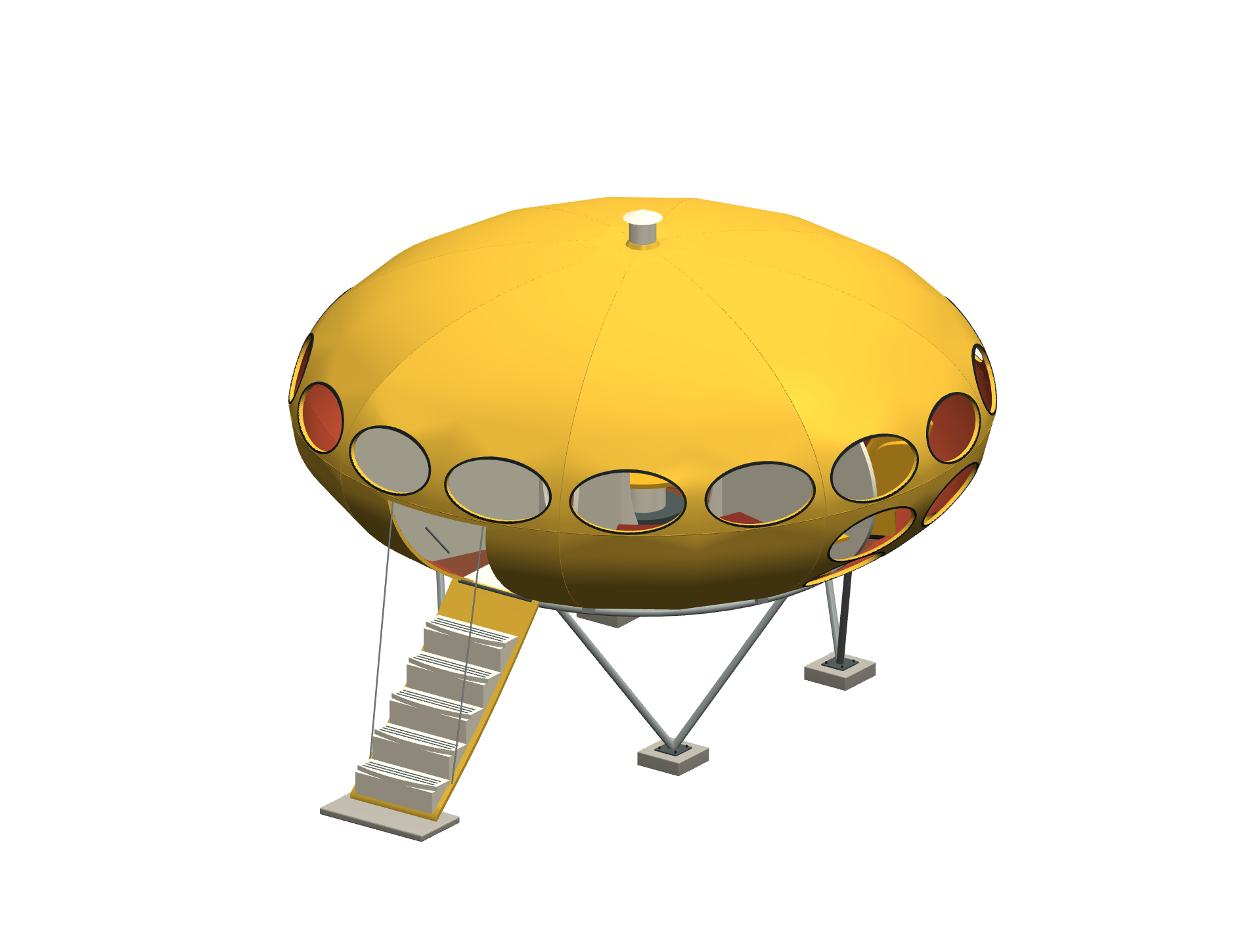
A later vision of futuristic living: rotate a furnished model, remove the roof, explore the cutaway and study the floor plan.
Sources and further reading
- City of Huntington Park: Historic Preservation Design Review Guidelines (PDF)
- National Park Service: Aquatic Park Bathhouse
- National Park Service: San Francisco Maritime places to go