The Siege of Syracuse (213-212 B.C.E.)
Tag, Tag, Tag, Tag
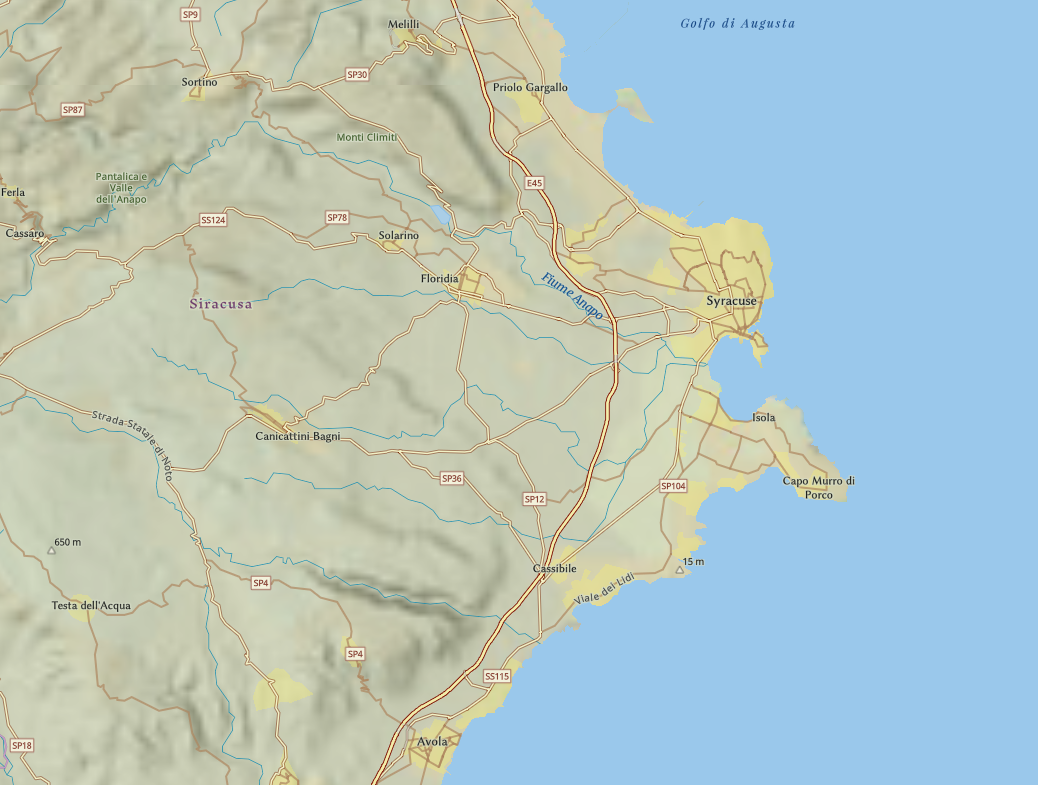
The Siege of Syracuse, which took place from 214 to 212 BCE, was a key conflict during the Second Punic War between the Roman Republic and the city of Syracuse, a former Roman ally that had aligned itself with Carthage. Located on the eastern coast of Sicily, Syracuse held a vital strategic position in the Mediterranean. The siege is particularly famous for the role played by the Greek mathematician and inventor Archimedes, who designed numerous defensive war machines to repel the Roman assault.
Following the death of Hiero II, a long-time ally of Rome, the throne of Syracuse passed to his grandson Hieronymus, who shifted allegiance to Hannibal and the Carthaginian cause. Rome, already stretched thin by Hannibal’s campaigns in Italy, could not tolerate this betrayal. A Roman force under the command of Consul Marcus Claudius Marcellus was dispatched to subdue the city.
The siege lasted for nearly two years and was conducted by land and sea. The Romans blockaded the city and launched numerous attacks, but Syracuse’s defenses—bolstered by ingenious war machines designed by Archimedes—held firm. These included catapults of extraordinary range and power, as well as purported devices that could lift and overturn ships, which later gave rise to the legend of the “Claw of Archimedes.”
Despite repeated efforts, the Romans were unable to breach the city walls for a considerable time. Archimedes’ mechanical innovations played a critical role in maintaining the city's resistance. His use of mathematics and engineering to improve the effectiveness of standard weapons exemplified the fusion of science and warfare in the Hellenistic world.
The Roman strategy eventually shifted to exploiting weaknesses in the city’s leadership and exploiting political divisions. In 212 BCE, the Romans launched a surprise nighttime assault during a religious festival and succeeded in breaching the walls. Chaos ensued within the city, and the Romans overran the defenders in brutal street-to-street combat.
During the sack of Syracuse, many civilians were killed, and the city’s treasures were looted. Among the casualties was Archimedes himself. Despite Marcellus’ explicit orders to spare him, Archimedes was reportedly killed by a Roman soldier after refusing to stop his work. His death marked a tragic end to one of the greatest scientific minds of antiquity.
With Syracuse under Roman control, all of Sicily fell firmly into Roman hands. This significantly improved Rome’s strategic position in the western Mediterranean and dealt a blow to Carthaginian influence in the region. The conquest also allowed Rome to secure vital grain supplies, bolstering its war effort against Hannibal.
The fall of Syracuse also marked the decline of Greek political independence in Sicily. Once a beacon of Hellenistic culture and power, Syracuse was reduced to a provincial city within the expanding Roman Republic. Roman administration, infrastructure, and law gradually replaced the Hellenistic systems that had defined the city for centuries.
In the broader context of the Second Punic War, the siege was a Roman success that helped shift the momentum back toward the Republic. Although Hannibal continued to threaten Italy for several more years, Rome’s grip on the western Mediterranean tightened steadily, and Syracuse’s fall was an important milestone in that process.
Today, the Siege of Syracuse is remembered not only as a military conquest but also as a moment when science and war dramatically intersected. The legacy of Archimedes as a pioneer of applied mathematics and engineering has far outlived the political significance of the siege itself, symbolizing both the potential and the tragedy of intellectual genius caught in the violence of history.
Sources
- Polybius. The Histories, Book VIII.
- Livy. Ab Urbe Condita, Book XXIV–XXV.
- Plutarch. Life of Marcellus.
- Goldsworthy, Adrian. The Punic Wars. Cassell, 2000.
- Freeman, Edward A. Sicily: Phoenician, Greek, and Roman. Macmillan, 1891.
- Heath, Thomas L. The Works of Archimedes. Cambridge University Press, 1897.
- Bradley, Keith. "Syracuse." In *The Oxford Encyclopedia of Ancient Greece and Rome*, Oxford University Press, 2010.